
If your hair feels brittle and lacks strength or shine, choosing the right hair masks is essential for restoration. Effective masks target damage by improving elasticity, moisture levels, and overall health through specialized ingredients like keratin, natural oils, and antioxidants. Proper selection can greatly reduce breakage and enhance softness, but understanding the options available helps guarantee you find the most suitable treatment. Exploring these choices in detail reveals solutions for hair that shows signs of wear and damage.
Arvazallia Hydrating Argan Oil Hair Mask and Deep Conditioner

The Arvazallia Hydrating Argan Oil Hair Mask and Deep Conditioner is an ideal choice for individuals with brittle or damaged hair seeking to improve moisture, strength, and overall hair health. This product, housed in an 8.45 oz jar, is designed to deeply hydrate and repair dry, overprocessed hair. It contains nourishing argan oil, rich in essential vitamins and nutrients, which promotes healthier strands. Suitable for all hair types—including treated, natural, and curly hair—it’s free from sulfates and parabens, making it gentle yet effective. Regular use enhances hair’s texture, elasticity, and shine, helping restore hair’s essence over time.
Best For: individuals with brittle, damaged, or overprocessed hair seeking deep hydration, repair, and improved manageability.
Pros:
- Deeply hydrates and revitalizes dry or damaged hair for a soft, silky feel
- Contains nourishing argan oil rich in vitamins to promote healthier strands
- Free from sulfates and parabens, making it gentle and suitable for all hair types
Cons:
- May be too rich for very fine or oil-sensitive hair types
- Can be heavy if applied excessively, leading to weight or buildup
- Requires consistent use over time to see significant long-term improvements
SheaMoisture Hydrating Hair Masque with Manuka Honey & Mafura Oil
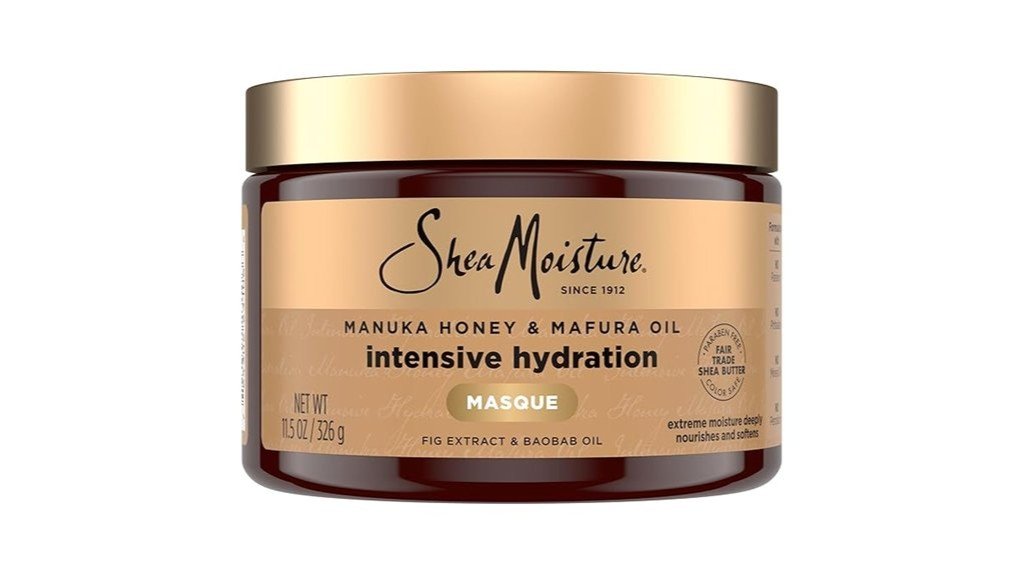
If your hair has become brittle, dry, or damaged from chemical treatments, heat styling, or environmental exposure, SheaMoisture Hydrating Hair Masque with Manuka Honey & Mafura Oil can be an effective solution. This deep conditioning treatment infuses hair with moisture, helping to restore softness and shine. It contains nourishing ingredients like Shea Butter, Mafura Oil, Honey, and African Rock Fig, which work together to strengthen hair follicles, smooth damaged strands, and reduce frizz. Suitable for all hair types, it rebuilds resilience, improves manageability, and offers long-lasting hydration. Regular use supports healthier, more vibrant hair even after frequent chemical or heat styling.
Best For: individuals with brittle, dry, damaged, or chemically treated hair seeking deep hydration, nourishment, and improved manageability.
Pros:
- Provides intense moisture and restores softness to dry or damaged hair
- Strengthens hair follicles and reduces frizz for a smooth, shiny finish
- Suitable for all hair types, including curly, coily, grey, and thick hair
Cons:
- Some users may find the scent strong or initially unusual
- Overuse or improper application on very coarse or porous hair can lead to dryness
- Large jar sizes may be less convenient for travel or on-the-go use
NUTRAHARMONY Hydrating Hair Mask for Dry, Frizzy & Damaged Hair

A deep conditioning mask like NUTRAHARMONY Hydrating Hair Mask is particularly effective for individuals whose hair is damaged, dry, or prone to frizz, especially when it has been over-processed through coloring or chemical treatments. This mask provides intensive moisture and actively repairs damage by nourishing each strand. Enriched with keratin, collagen, biotin, argan oil, and coconut oil, it strengthens, smooths, and rebuilds hair structure. In just seven minutes, it restores softness, elasticity, and shine, making hair more manageable. Its formulation targets dry, brittle, or color-treated hair, offering salon-like results at home without needing professional assistance.
Best For: individuals with damaged, dry, frizzy, or over-processed hair seeking intensive hydration and professional-quality repair at home.
Pros:
- Provides deep, immediate moisture and repair within just 7 minutes.
- Enriched with nourishing ingredients like keratin, collagen, biotin, argan oil, and coconut oil for strength and shine.
- Suitable for color-treated and chemically processed hair, restoring manageability and softness.
Cons:
- May weigh down very fine or oily hair if used excessively.
- Needs to be combined with a consistent hair care routine for best results.
- Some users might experience sensitivity or allergies to natural oils and ingredients.
Factors to Consider When Choosing Hair Masks for Brittle Hair
When choosing a hair mask for brittle hair, it’s important to take into account your hair’s porosity and damage level, as these factors influence how well ingredients will penetrate and strengthen your strands. You should also evaluate whether a product offers moisturizing or repairing benefits, depending on your specific needs, and verify it is compatible with your hair type. Additionally, paying attention to recommended application frequency helps maximize results while avoiding overload that could worsen brittleness.
Hair Porosity and Damage
Understanding your hair’s porosity is essential because it directly affects how your hair absorbs and retains moisture, which influences how well a hair mask works. High-porosity hair tends to be more damaged and dehydrated, so it benefits from intensely moisturizing and repairing masks containing ingredients like proteins, keratin, or nourishing oils to rebuild the structure. Conversely, low-porosity hair often resists product absorption, requiring lightweight, humectant-rich masks to attract moisture without buildup. Damaged hair, with lifted or broken cuticles, especially needs masks that include collagen or biotin to improve elasticity and reinforce the hair. Evaluating the level of damage helps tailor your choice of ingredients, ensuring the mask effectively restores strength and minimizes brittleness.
Ingredient Effectiveness
Choosing effective ingredients for hair masks aimed at repairing brittle hair requires careful consideration of their specific functions and proven benefits. Ingredients like keratin, collagen, and biotin are scientifically supported to strengthen and rebuild structural integrity, helping restore hair’s resilience. Natural oils such as argan and coconut penetrate the hair shaft to deliver deep moisture, reducing dryness and brittleness. Heat-activated or time-released nourishing agents can enhance ingredient efficacy, providing ongoing repair benefits. Formulas that are paraben-free and sulfate-free help maintain the hair’s natural moisture barrier, preventing additional damage. Additionally, antioxidants like honey and African Rock Fig protect hair from environmental stressors, which can exacerbate brittleness. Selecting products with these ingredients maximizes the potential for effective repair and lasting strength.
Hair Type Compatibility
Selecting the right hair mask for brittle hair depends largely on your specific hair type, as different formulations are designed to provide targeted benefits. For instance, curly and coily hair generally requires more intense moisture and nourishment, favoring masks with heavier oils or butters. Straight or wavy hair, which tends to be less porous, benefits from lightweight, protein-based masks that strengthen without weighing hair down. The hair’s porosity also influences your choice; highly porous hair absorbs products quickly and may need richer, more hydrating masks containing oils like shea or coconut. Fine or thin brittle hair requires non-greasy, protein-rich masks to build strength without extra weight, while thick, coarse hair can tolerate richer, oil-based treatments for better repair. Matching your hair type to the appropriate mask enhances restoration and reduces breakage.
Moisturizing vs. Repairing
When choosing a hair mask for brittle hair, it’s important to take into account whether the primary concern is dryness or damage. Moisturizing masks focus on hydrating dry strands by locking in moisture with ingredients like oils and humectants, which help improve softness and shine. These are ideal if your hair feels rough or straw-like due to environmental factors or over-styling. Repairing masks, on the other hand, target damage by including strengthening agents such as keratin, collagen, or proteins, which restore structural integrity and reduce breakage. If your hair has been exposed to chemical treatments or heat styling, repairing masks provide the necessary reinforcement. Some products combine both qualities, offering hydration and strength for an all-encompassing approach. Choose based on whether your hair needs more moisture or structural repair.
Application Frequency
The frequency with which you apply hair masks for brittle hair plays a crucial role in both the effectiveness of treatment and the health of your hair overall. Generally, applying a mask once a week or every two weeks is suitable for maintaining hydration and strengthening. However, if your hair is severely damaged, you might benefit from applying a nourishing mask twice a week to support faster repair. It’s important to balance this with regular clarifying treatments to prevent product buildup, which can weigh hair down or cause additional damage. Pay attention to how your hair responds—if it feels greasy or weighed down, reduce the frequency. Adjusting based on your hair’s needs helps optimize benefits without risking further harm.
Scent and Texture
The scent and texture of a hair mask are important factors that can influence both the effectiveness of the treatment and your overall experience during application. The scent can vary from natural, floral, or fruity fragrances to stronger, medicinal smells. A pleasant fragrance may improve your mood and encourage consistent use, but some scents, especially those with essential oils, could cause sensitivities or allergic reactions, particularly on sensitive scalps. Texture also plays a vital role; thick, creamy pastes offer deep hydration but might feel heavy or greasy on fine or limp hair. Lighter, gel-like masks spread easily and suit oilier or thin hair types. Choosing a mask with a comfortable scent and suitable texture ensures effective treatment and a pleasant application process.
Ethical and Natural Options
Choosing an ethical and natural hair mask involves examining the ingredients and sourcing practices to guarantee your product aligns with your values and promotes healthy hair. These masks typically feature plant-based, organic ingredients that avoid synthetic chemicals like sulfates, parabens, and artificial fragrances, reducing potential scalp irritation and long-term damage. Many natural options are cruelty-free and sustainably sourced, ensuring environmentally responsible production methods. Ingredients like Shea Butter, Mafura Oil, or Manuka Honey are common, providing nourishment without harmful additives. Certifications or transparent sourcing practices help verify authenticity and adherence to strict standards. Such masks are suitable for sensitive scalps and damaged hair, supporting overall hair cruciality and reducing the risk of adverse reactions. Prioritizing these factors helps you make a healthier, ethically conscious choice for brittle hair care.
Frequently Asked Questions
How Often Should I Use a Hair Mask for Brittle Hair?
You should use a hair mask for brittle hair once a week or every two weeks. This frequency helps restore strength and shine without overwhelming your hair, keeping it healthy and nourished with regular, targeted treatments.
Can Hair Masks Damage Chemically Treated Hair?
Hair masks can potentially damage chemically treated hair if they contain harsh ingredients or are used too frequently. To avoid damage, choose gentle, nourishing masks formulated for processed hair, and follow recommended usage instructions carefully.
Are Natural Ingredients More Effective Than Synthetic Ones?
Natural ingredients often work more gently and effectively because they nourish and strengthen brittle hair without harsh chemicals. You might notice better hydration and shine over time, making natural masks a safer, more beneficial choice for restoring hair strength.
Do Heat Treatments Enhance Hair Mask Benefits?
Yes, heat treatments can enhance hair mask benefits by opening your hair cuticles, allowing nourishing ingredients to penetrate deeper, which helps repair brittleness and boosts shine. Just make sure you use moderate heat to prevent damage.
Can Hair Masks Repair Severely Damaged Hair Completely?
Hair masks can considerably improve severely damaged hair by nourishing and sealing the cuticle, but they might not fully repair all damage. Consistent use combined with healthy hair practices offers the best chance for improvement and restored strength.