
Choosing the right body sunscreen for daily protection requires careful consideration of factors like SPF rating, broad-spectrum coverage, water resistance, and skin friendliness. It’s essential to select a product that suits your activity level and skin type, providing reliable defense against sun damage. The three options discussed—Hempz SPF 50, Aveeno SPF 60, and Neutrogena SPF 70—each offer specific benefits worth understanding to guarantee you stay protected consistently.
Hempz Daily Body Sunscreen SPF 50, 6 oz

Hempz Daily Body Sunscreen SPF 50 is an excellent choice for individuals seeking reliable daily sun protection that also nourishes the skin. This lightweight, non-greasy formula offers broad-spectrum SPF 50, blocking harmful UVA and UVB rays effectively. Its clear application and reef-safe composition, free from oxybenzone and octinoxate, make it suitable for daily use on both face and body. With ingredients like hemp seed oil and shea butter, it helps replenish moisture and promotes skin hydration. Additionally, it’s vegan, cruelty-free, gluten-free, and made in the USA, emphasizing safety and ethical standards. This sunscreen combines effective protection with skin nourishment, making it a practical daily option.
Best For: individuals seeking a lightweight, hydrating, and reef-safe daily sunscreen that offers broad-spectrum SPF 50 protection for both face and body.
Pros:
- Provides effective SPF 50 broad-spectrum sun protection.
- Hydrates skin with hemp seed oil and shea butter while feeling non-greasy.
- Reef-safe and free from oxybenzone and octinoxate, suitable for sensitive skin and environmentally conscious users.
Cons:
- May require reapplication during extended sun exposure.
- Slightly larger 6 oz size may be less convenient for travel.
- Some users might prefer a scented option over the natural scent of hemp and fruit extracts.
Aveeno Protect + Hydrate Sunscreen Lotion with Prebiotic Oat, SPF60, Oil-Free, Water & Sweat Resistant (80-min), 12 Fl Oz

The Aveeno Protect + Hydrate Sunscreen Lotion with Prebiotic Oat is an excellent choice for individuals seeking reliable, everyday sun protection that also offers moisturizing benefits. Its broad spectrum SPF 60 guards against UVA and UVB rays, reducing the risk of sunburn and skin damage. The oil-free, lightweight formula absorbs quickly, leaving the skin feeling soft, hydrated, and free of residue or white cast. Water and sweat resistant for up to 80 minutes, it’s suitable for outdoor activities and daily routines. The large 12 fl oz pump bottle makes it convenient for face and body use, providing all-day protection without feeling greasy.
Best For: individuals seeking a lightweight, hydrating, and effective broad spectrum SPF 60 sunscreen suitable for daily use on both face and body.
Pros:
- Provides broad spectrum SPF 60 protection against UVA and UVB rays
- Oil-free, quick-absorbing, and leaves no white cast or greasy residue
- Water and sweat resistant for up to 80 minutes, ideal for outdoor activities
Cons:
- Some users may find the scent moderate or perceptible
- Not a mineral-based sunscreen, which may be preferred by those seeking physical blockers
- Large size may be less portable for quick, on-the-go application
Neutrogena Sunscreen Lotion Beach Defense SPF 70 (6.7 Fl Oz)
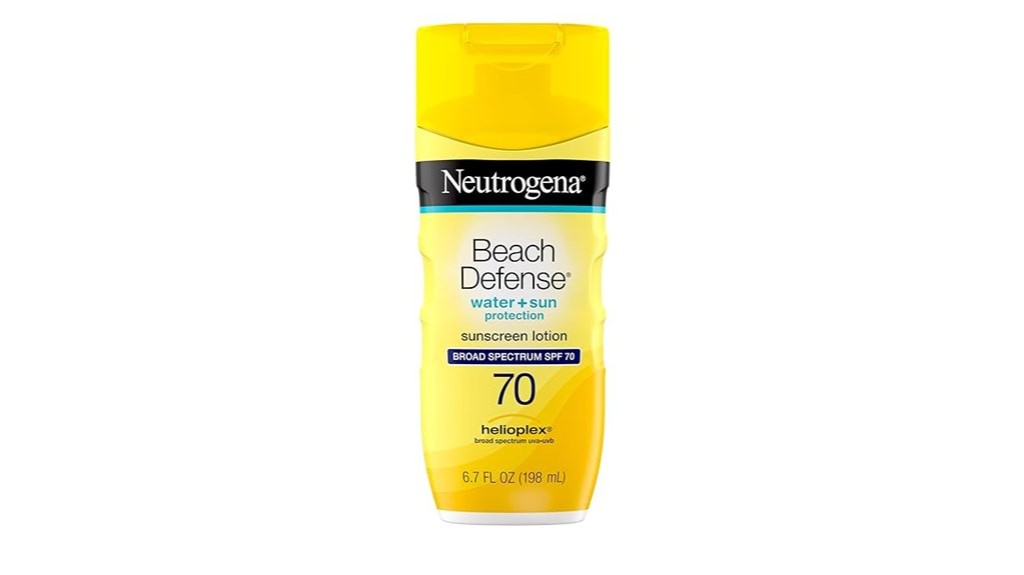
Neutrogena Sunscreen Lotion Beach Defense SPF 70 is an excellent choice for individuals seeking reliable, high-SPF sun protection that is both safe for the environment and suitable for sensitive skin. It provides broad spectrum UVA/UVB coverage, protecting against harmful rays and reducing skin cancer and early aging risks. Water-resistant for up to 80 minutes, it’s ideal for outdoor activities like swimming, hiking, or beach days. Its lightweight, non-greasy formula absorbs quickly without leaving a white cast. Free from oxybenzone, octinoxate, and PABA, it aligns with environmental standards and is safe for sensitive skin and children, ensuring effective, consistent protection during prolonged sun exposure.
Best For: individuals seeking high SPF, environmentally friendly sun protection suitable for sensitive skin, and active outdoor lifestyles.
Pros:
- Provides broad spectrum UVA/UVB protection with SPF 70, suitable for prolonged sun exposure.
- Water-resistant for up to 80 minutes, ideal for swimming, sports, and outdoor activities.
- Lightweight, quick-absorbing formula that leaves no white cast and is free from oxybenzone, octinoxate, and PABA.
Cons:
- Slightly more expensive compared to standard drugstore sunscreens.
- Requires reapplication every 1.5 hours or after water contact for optimal protection.
- The scent, while pleasant initially, may fade over time and might not appeal to everyone.
Factors to Consider When Choosing Body Sunscreens for Daily Protection
When selecting a body sunscreen for daily use, it’s important to evaluate several essential factors that can affect your protection and comfort. You should assess the sun protection level to make sure it matches your activity and sun exposure, and check skin compatibility to prevent allergic reactions or irritation. Additionally, features like water resistance, ingredient safety, and ease of application play vital roles in choosing a product that fits seamlessly into your routine and offers reliable protection.
Sun Protection Levels
Choosing the right sun protection level involves understanding how SPF values impact your skin’s safety. SPF indicates the amount of UVB rays that can reach your skin; higher SPF values like 60 or 70 block more UVB rays, reducing the risk of sunburn and skin damage. However, the protection difference between SPF 30 and SPF 50 is modest, with SPF 50 allowing only about 2% fewer UVB rays. Broad-spectrum sunscreens protect against both UVA and UVB rays, providing more thorough defense. SPF ratings do not determine how long your protection lasts, so reapplying every two hours, especially after sweating or swimming, is necessary. For daily use, SPF 30 is usually sufficient, but higher SPFs are beneficial for extended outdoor activities.
Skin Compatibility
Ensuring your body sunscreen is compatible with your skin type is essential for effective and safe daily protection. If you have sensitive skin, look for products formulated specifically for that, free from irritants like fragrances, oxybenzone, or octinoxate, which can cause reactions. Seek sunscreens with soothing ingredients such as aloe vera, oat extract, or prebiotics, as these help reduce irritation. Choosing products labeled as hypoallergenic increases the likelihood of compatibility with diverse skin types. It’s wise to test a small patch of skin before full application to check for adverse reactions. For acne-prone or oily skin, opt for non-comedogenic formulas, which won’t clog pores or cause breakouts. These considerations help guarantee your sunscreen provides protection without compromising your skin’s health.
Water Resistance Features
Water resistance is an important feature to contemplate when selecting a body sunscreen for daily use, especially if you anticipate sweating or exposure to water during activities or exercise. Sunscreens labeled as water-resistant are designed to maintain their protection for a specified time, generally between 40 to 80 minutes of water exposure or heavy sweating. They do not wash off immediately upon contact with water, providing ongoing protection during water activities or vigorous movement. However, water-resistant sunscreens are not entirely waterproof and require reapplication after prolonged water exposure or towel drying. The American Academy of Dermatology recommends reapplying every two hours or more frequently if you’re swimming or sweating heavily. Proper reapplication ensures continuous skin protection and prevents early sunscreen loss.
Ingredient Safety
Since some chemical ingredients in sunscreens can penetrate the skin and potentially cause health concerns, it’s important to thoroughly examine the components of any product you consider. Ingredients like oxybenzone and octinoxate have been linked to skin irritation and environmental harm, particularly to marine life. Chemical sunscreens containing avobenzone, oxybenzone, or octocrylene may also have endocrine-disrupting effects. As a safer alternative, mineral-based sunscreens with zinc oxide or titanium dioxide offer physical barriers that are less likely to penetrate the skin, making them suitable for sensitive skin. Additionally, choosing formulations free from parabens—hormone disruptors—and products labeled allergen-free and dermatologist-tested can further lower the risk of allergic reactions and sensitivities. Carefully checking these factors helps guarantee safe, effective daily sun protection.
Ease of Application
Choosing a body sunscreen that applies easily can considerably influence how consistently you use it. Sunscreens with smooth, non-greasy textures that absorb quickly help reduce application time and effort, making daily use more practical. Formulas designed to spread evenly without leaving streaks or white residue ensure full, even coverage, which is essential for effective protection. Liquid or spray sunscreens often provide faster, more convenient application over large body areas compared to thicker creams or sticks, saving time without sacrificing efficacy. A lightweight feel enhances comfort, especially when wearing clothing or makeup, encouraging regular reapplication. Additionally, packaging features like flip-top caps or spray nozzles facilitate simple, mess-free application on the go, streamlining your daily routine while maximizing protection.
Frequently Asked Questions
How Often Should I Reapply Body Sunscreen During the Day?
You should reapply body sunscreen every two hours when outdoors, after sweating, swimming, or towel drying. This guarantees continuous protection against harmful UV rays, keeping your skin safe and reducing the risk of sun damage.
Are There Specific Sunscreens Suitable for Sensitive Skin?
Yes, you should look for sunscreens labeled “suitable for sensitive skin” or “hypoallergenic.” Choose mineral-based formulas with zinc oxide or titanium dioxide, as they’re gentler and less likely to cause irritation on sensitive skin.
Can I Use Body Sunscreen on My Face Safely?
Yes, you can use body sunscreen on your face safely, but choose a formula designed for facial skin, preferably non-comedogenic and fragrance-free, to avoid irritation or breakouts. Always patch-test new products before full application.
What Ingredients Should I Avoid in Daily Body Sunscreens?
You should avoid ingredients like oxybenzone, parabens, and fragrance, as they can cause irritation or harm. Look for mineral-based sunscreens with zinc oxide or titanium dioxide, which are safer and protect effectively without unnecessary chemicals.
How Do I Choose the Right SPF for Different Activities?
You should select higher SPF, like 30 or above, for outdoor activities involving prolonged sun exposure, and lower SPF, around 15-20, for quick errands or indoors. Always consider your skin type and activity level.