If you’re seeking effective relief from keratosis pilaris, selecting the right body lotion is essential. Some formulations combine exfoliants like glycolic or lactic acid with hydrating ingredients such as glycerin or ceramides, which help smooth skin and reduce roughness over time. Choosing products backed by dermatologists or with proven ingredients can make a noticeable difference. To find the best option tailored to your skin’s needs, consider factors such as ingredient strength, skin sensitivity, and consistency of use.
Glytone Exfoliating Body Lotion for Dry Skin (8.4 Fl.Oz)
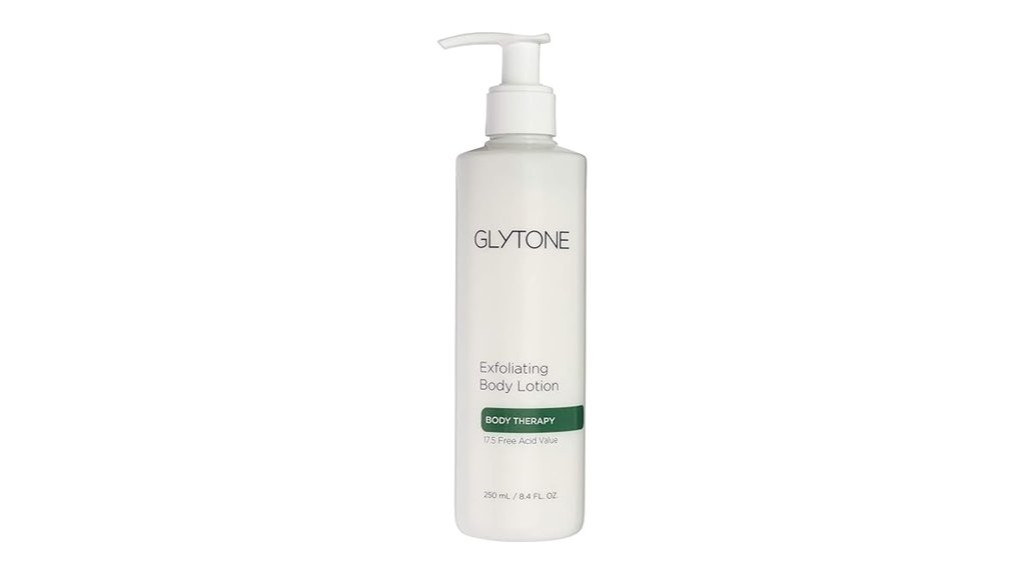
Glytone Exfoliating Body Lotion for Dry Skin (8.4 Fl.Oz) is an excellent choice for individuals managing keratosis pilaris who need a targeted solution that combines exfoliation with hydration. It contains 17.5% glycolic acid, which effectively breaks down dead skin cells, improving skin texture and reducing bumps. The lotion also includes allantoin, promoting deeper skin renewal. Its benefits extend to smoothing rough areas, encouraging a healthier, more even appearance, and restoring skin’s natural glow. Suitable for sensitive skin, it’s free from fragrances and harsh chemicals, making daily use safe and effective. Its hydrating ingredients keep skin soft and protected throughout the day.
Best For: individuals with dry, rough, or keratosis pilaris-prone skin seeking a gentle, effective exfoliating and hydrating solution suitable for daily use.
Pros:
- Contains 17.5% glycolic acid for powerful exfoliation and skin renewal
- Fragrance-free and free from harsh chemicals, ideal for sensitive skin
- Provides intensive moisturizing to keep skin soft, smooth, and protected throughout the day
Cons:
- May cause mild sensitivity or irritation for very sensitive skin types initially
- Requires consistent daily application for best results, which may be time-consuming
- The strong glycolic acid concentration might not be suitable for all skin conditions without prior patch testing
AmLactin Daily Nourish 12% Body Lotion with Lactic Acid
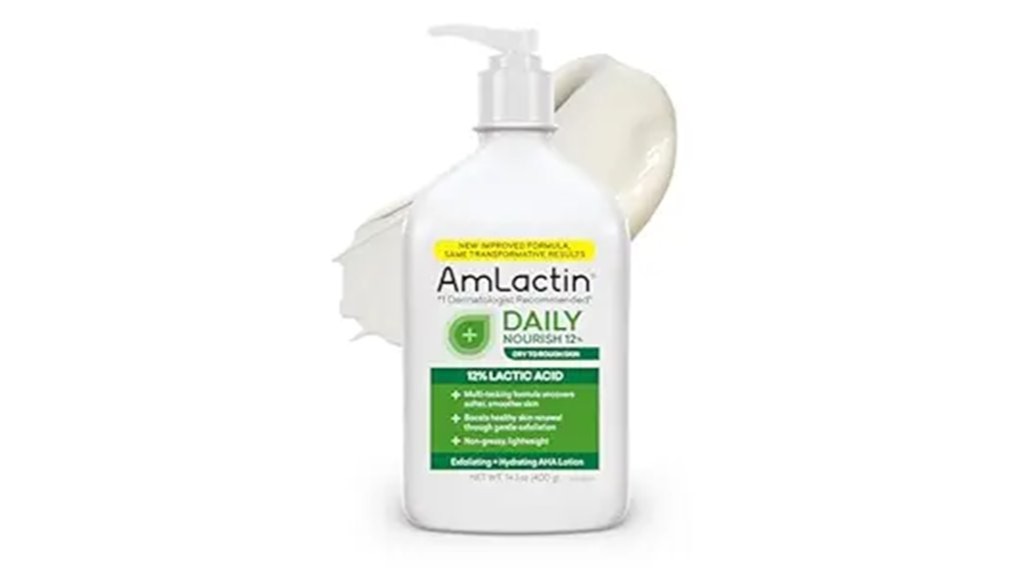
If you’re looking for a body lotion specifically effective for keratosis pilaris and associated rough, dry skin, AmLactin Daily Nourish 12% Body Lotion with Lactic Acid offers a compelling solution. This therapeutic moisturizer combines exfoliation and deep hydration, formulated with 12% lactic acid to promote skin renewal. It helps improve skin texture, reduces the appearance of bumps, and addresses dryness, dark spots, and hyperpigmentation. Suitable for sensitive skin, its lightweight, non-greasy, fragrance-free formula absorbs quickly without residue. Regular use can lead to smoother, softer skin within weeks, making it a practical choice for managing keratosis pilaris symptoms effectively and comfortably.
Best For: individuals with keratosis pilaris, rough, dry, or textured skin seeking an effective exfoliating and hydrating body lotion suitable for sensitive skin.
Pros:
- Combines exfoliation and hydration in one step, reducing the need for multiple products.
- Quickly absorbs without leaving greasy residue, making it convenient for daily use.
- Improves skin texture, smoothness, and appearance with consistent use.
Cons:
- Slightly strong or pungent odor that some users find unpleasant.
- May cause mild tingling or burning on damaged or sensitive skin.
- Some users experience transient irritation or discomfort if applied on open wounds.
DERMAdoctor KP Duty Moisturizing Lotion for Keratosis Pilaris
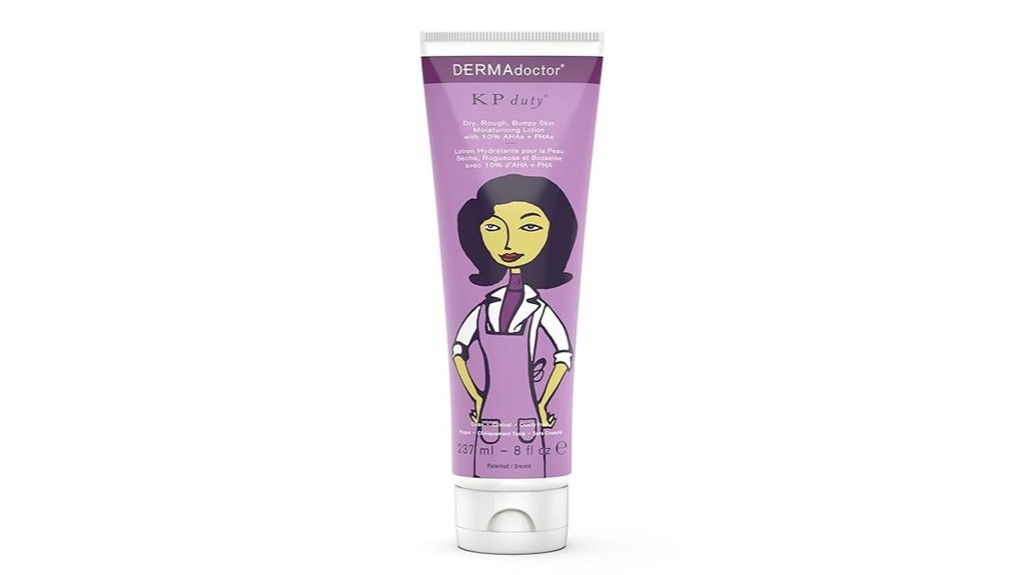
The DERMAdoctor KP Duty Moisturizing Lotion is specifically formulated for individuals dealing with keratosis pilaris and other skin conditions characterized by dryness, roughness, and bumpiness. It combines natural and chemical exfoliants with ceramides, lipids, and botanicals to replenish and hydrate the skin. This lotion targets rough, bumpy areas on the body, arms, legs, and feet, helping improve skin tone and smoothness over time. Its unique formula reduces redness, calms irritation, and is suitable for sensitive skin. With active ingredients like AHAs and PHAs, it gently exfoliates dull skin without causing dryness or irritation, making it effective year-round.
Best For: individuals with keratosis pilaris, dry, rough, and bumpy skin on the body seeking gentle exfoliation and deep hydration.
Pros:
- Effectively smooths skin texture and reduces bumps over time
- Gentle enough for sensitive and allergy-prone skin
- Includes a blend of natural and chemical exfoliants with hydrating ingredients
Cons:
- May take consistent use over several weeks to see noticeable improvements
- As a body lotion, might not be suitable for facial use
- Some users may experience initial mild tingling due to exfoliants
Factors to Consider When Choosing Body Lotions for Keratosis Pilaris
When choosing a body lotion for keratosis pilaris, it’s important to consider the effectiveness of its ingredients, as some can better improve skin texture and smoothness. You should also assess your skin’s sensitivity to avoid products that might cause irritation, especially if you have sensitive skin. Additionally, look at the lotion’s exfoliation strength and hydration ability to determine how well it helps remove dead skin and maintain moisture, while being mindful of fragrances and potential irritants that could worsen skin condition.
Ingredient Efficacy
Choosing the right body lotion for keratosis pilaris involves carefully considering the active ingredients it contains, as these directly influence its effectiveness. Exfoliants like AHAs, BHAs, and PHAs loosen and remove dead skin buildup, revealing smoother skin. Lactic acid offers gentle exfoliation and improves hydration, making it suitable for sensitive skin. Ingredients such as ceramides and lipids strengthen the skin’s barrier, reducing moisture loss and enhancing texture over time. Natural components like willow bark provide additional exfoliation, while botanicals help soothe irritation and minimize redness. The concentration of active ingredients, such as glycolic or lactic acid, determines how potent the lotion is at exfoliating. Higher concentrations usually mean stronger effects, but lower amounts are often better for sensitive skin.
Skin Sensitivity
Skin sensitivity can greatly influence which body lotions are suitable for managing keratosis pilaris, as sensitive skin tends to react more easily to certain ingredients. When choosing a lotion, look for formulations free of fragrances, dyes, and harsh chemicals, as these can trigger irritation or allergic reactions. Opt for products with calming ingredients like aloe vera, oat extract, or ceramides, which help soothe the skin and reduce redness or inflammation. For gentle exfoliation, choose lotions with mild exfoliants such as PHA or low concentrations of AHA, which offer effective smoothing without excessive irritation. Before applying a new product, always perform a patch test on a small skin area to ensure compatibility with your delicate skin. This approach minimizes the risk of adverse reactions and discomfort.
Exfoliation Strength
Exfoliation strength plays a key role in managing keratosis pilaris, as it directly affects how effectively dead skin cells are shed and the skin’s texture improves. Higher concentrations of alpha hydroxy acids (AHAs), like glycolic or lactic acid, generally provide stronger exfoliation, helping to smooth rough patches. The Free Acid Value (FAV) indicates the potency, with higher percentages leading to more intensive exfoliation. However, overly aggressive exfoliation can cause irritation or damage, especially for sensitive skin. Using formulations with a balanced pH around 3-4 helps optimize acid effectiveness while maintaining skin barrier integrity. Combining mild exfoliants, such as PHAs, with stronger acids can deliver effective yet gentle results compatible with different sensitivities.
Hydration Capacity
The hydration capacity of a body lotion is a crucial factor to contemplate when managing keratosis pilaris, as it determines how effectively the product can replenish and retain moisture in dry, rough skin. Products containing humectants like urea, glycerin, or hyaluronic acid draw water into the outer skin layers, increasing hydration levels. Emollients such as squalane or natural oils create a barrier that seals in moisture, reducing water loss over time. Ingredients like ceramides and lipids strengthen the skin’s protective barrier, aiding in better moisture retention and minimizing dryness. The lotion’s viscosity and occlusive properties influence its ability to form a semi-permeable barrier, especially important on very dry or rough areas. Regular application, particularly after bathing or exfoliating, helps sustain skin hydration and alleviate symptoms.
Fragrance & Irritants
Fragrance and other potential irritants are important factors to contemplate when selecting a body lotion for keratosis pilaris, as these substances can worsen skin sensitivity and cause inflammation. Fragrance-free lotions are generally preferable because added scents, including essential oils, may trigger redness or burning, especially if your skin is already sensitive. Many products aimed at sensitive skin avoid common irritants like alcohol, parabens, and dyes, which can cause allergic reactions or further irritation. Choosing lotions labeled as hypoallergenic can also help reduce the risk of adverse reactions, as they are designed to minimize irritation. Additionally, non-comedogenic formulas prevent pore clogging, reducing the likelihood of breakouts or aggravation of keratosis pilaris.
Application Ease
Choosing a body lotion that’s easy to apply can make a significant difference in managing keratosis pilaris effectively. Look for products with pump dispensers or squeeze tubes, which allow for controlled, mess-free application. This helps you avoid waste and guarantees precise dosing. Opt for lightweight, non-greasy formulas, as they absorb quickly and spread easily over large areas, reducing the need for vigorous rubbing. A lotion with a smooth texture that glides effortlessly onto your skin minimizes discomfort and makes daily application faster. Additionally, if you prefer targeting specific areas, consider lotions with a thin, liquid consistency for more precise application. Ensure the packaging is designed for easy use in different positions—whether you’re standing or lying down—so you can consistently apply the product with minimal hassle.
Overall Suitability
When selecting a body lotion for keratosis pilaris, it’s vital to evaluate how well it exfoliates dead skin cells without causing irritation. Look for formulations containing gentle exfoliants like AHAs or PHAs, as these can improve skin texture without drying or irritating sensitive skin. The lotion’s compatibility with your skin type ensures consistent use and reduces the risk of adverse reactions. Hydrating ingredients such as ceramides, squalane, or urea help maintain moisture, which is necessary for managing keratosis pilaris. Avoid products with harsh chemicals, fragrances, or alcohols, as these may worsen irritation or compromise the skin barrier. Overall, prioritizing gentle exfoliants combined with hydrating ingredients helps achieve effective and safe results suitable for sensitive and dry skin.
Frequently Asked Questions
Can These Lotions Prevent Keratosis Pilaris From Recurring?
Yes, these lotions can help prevent keratosis pilaris from recurring by consistently moisturizing your skin, exfoliating dead cells, and maintaining hydration. Regular use improves skin texture over time, reducing appearance and frequency of flare-ups.
Are These Lotions Suitable for Sensitive Skin Types?
Yes, many of these lotions are suitable for sensitive skin, but you should verify ingredients carefully. Look for gentle, fragrance-free options, and consider doing a patch test first to ensure no irritation occurs.
How Often Should I Apply These Body Lotions?
You should apply these lotions twice daily, once in the morning and again before bed. Consistency helps improve your skin, so stick to this routine to see the best results in reducing keratosis pilaris.
Do These Lotions Have Any Known Side Effects?
These lotions generally have minimal side effects, but you might experience temporary redness, dryness, or irritation. It’s best to do a patch test first and consult your dermatologist if you notice severe or persistent reactions.
Can Teenagers or Children Use These Products Safely?
Yes, teenagers and children can generally use these lotions safely when recommended by a doctor. Always follow the product instructions, start with a small patch test, and consult a healthcare professional if you have concerns or sensitive skin.